
Posts by CalPilots
The Father's Day Fly-In at Columbia Airport
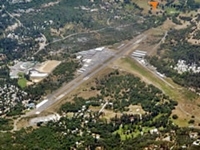
 This year, the Columbia Airport will be celebrating its 49th Annual Father’s Day Fly-In from June 19-21st, 2015. The event, sponsored by the airport, will celebrate the holiday weekend with live music, airplane rides, and family-friendly activities.
The weekend-long event is dedicated to Cal Fire pilot, Geoffrey “Craig” Hunt, who died last year flying for the Dog Rock Fire in Yosemite. A small dedication will precede the National Anthem at 11:30 a.m. at the opening ceremony on Saturday.
Read MoreThe Father’s Day Fly-In at Columbia Airport
This year, the Columbia Airport will be celebrating its 49th Annual Father’s Day Fly-In from June 19-21st, 2015. The event, sponsored by the airport, will celebrate the holiday weekend with live music, airplane rides, and family-friendly activities.
The weekend-long event is dedicated to Cal Fire pilot, Geoffrey “Craig” Hunt, who died last year flying for the Dog Rock Fire in Yosemite. A small dedication will precede the National Anthem at 11:30 a.m. at the opening ceremony on Saturday.
Read MoreSouthern California Airspace Improvements


FAA Releases Draft Environmental Assessment for Southern California Airspace Improvements
The U.S. Department of Transportation/Federal Aviation Administration (FAA) is seeking public comment on the Draft Environmental Assessment (Draft EA) for the Southern California Metroplex project, a comprehensive proposal to improve the flow of air traffic into and out of Southern California by making the airspace safer and more efficient.
The project proposes to replace dozens of existing conventional air traffic procedures with new satellite-based procedures, which are a key component of the FAA’s Next Generation Air Transportation System (NextGen). The Metroplex proposal encompasses most of Southern California and includes six major airports.
Read MoreThunderstorms

Fly safely around summer storms by getting to know them—and your resources—a little better.
Thunderstorms can be awesomely beautiful phenomena when viewed from the ground. They also contain almost every known aviation hazard—turbulence, icing, hail, lightning, microbursts, reduced visibility, and strong winds. So, when viewed from the air, thunderstorms can be terrifying. Understanding the how and why of the weather and your weather avoidance tools can increase your margin of safety when slipping the surly bonds this summer.
Read MoreCongress Drops Noise Amendment To Appropriations Bill
Eight Associations Successfully Lobby Congress Eliminate The Provision
A group of eight aviation associations recently sent a joint letter to the leaders of the House Appropriations Committee in a successful attempt to convince the committee not to regulate by legislation.At issue was the Transportation, Housing and Urban Development appropriations bill, which contains an amendment to impose a noise curfew at Burbank, California’s Bob Hope Airport. The amendment was defeated on Tuesday.
The broad coalition had said the amendment circumvents existing federal law (the Airport Noise and Capacity Act of 1990) intended to prevent a patchwork of inconsistent local requirements.
Read More97th edition Los Angeles Section Aeronautical Chart
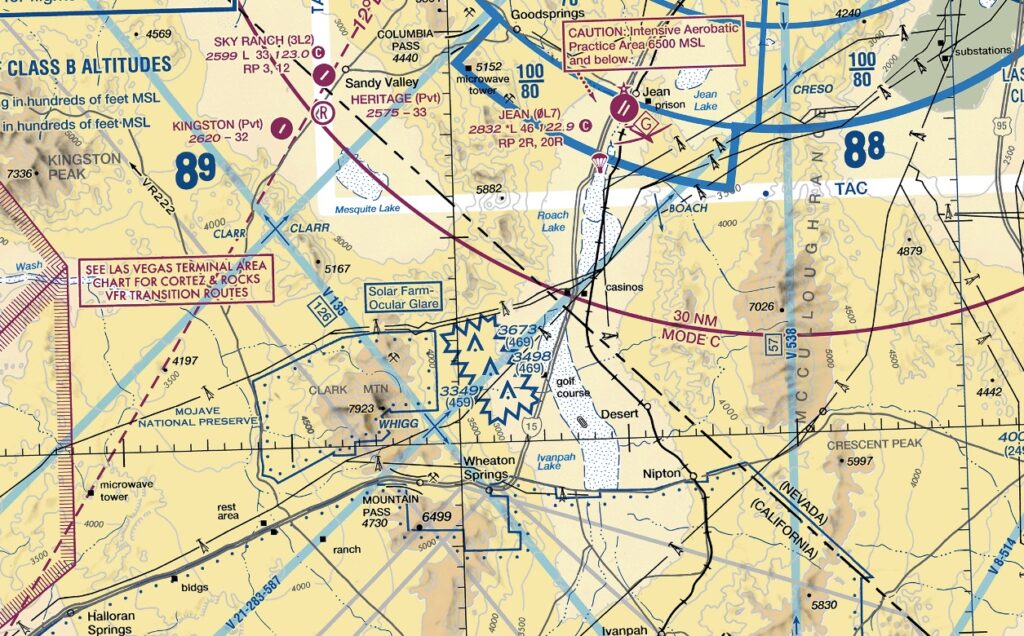
Attached is a snapshot of the new 97th edition Los Angeles Section Aeronautical Chart’s depiction of the Ivanpah Solar Plant hazard alert. FYI, the boundary symbology the Aeronautical Charting Forum has identified for utilization is the international charting symbol for a radiation hazard. As previously shared, pilots should make reports of associated hazards via the…
Read MorePilot Insights –

 Pilot Insights – What’s Harder? Flying in Class B Airspace or Taxiing at a Complex Airport?
FAA Issues Alert for Transponder Use

On May 19, the FAA issued a Safety Alert for Operators (SAFO) that advises all operators and pilots of the need to ensure that transponders are in the altitude reporting mode whenever their aircraft is on an airport movement area at all airports. Runway safety systems, such as Airport Surface Detection Equipment-Model X (ASDE-X), use…
Read MoreFLIGHT ADVISORY GPS Testing 02 – 10 June 2015 Ridgecrest, California

Notice Number: NOTC6025 FLIGHT ADVISORY GPS Testing CHLK GPS 15-07 02 – 10 June 2015 Ridgecrest, California More information available at the download link below: https://www.faasafety.gov/files/notices/2015/May/CHLK_15-07_GPS_Flight_Advisory.pdf
Read MoreFLIGHT ADVISORY GPS Testing 01 June 2015 Barstow, CA.

Notice Number: NOTC6024 FLIGHT ADVISORY GPS Testing NTC GPS 15 – 01 01 June 2015 Barstow, CA. More information available at the download link below: https://www.faasafety.gov/files/notices/2015/May/NTC_15-01_GPS_Flight_Advisory.pdf
Read More